
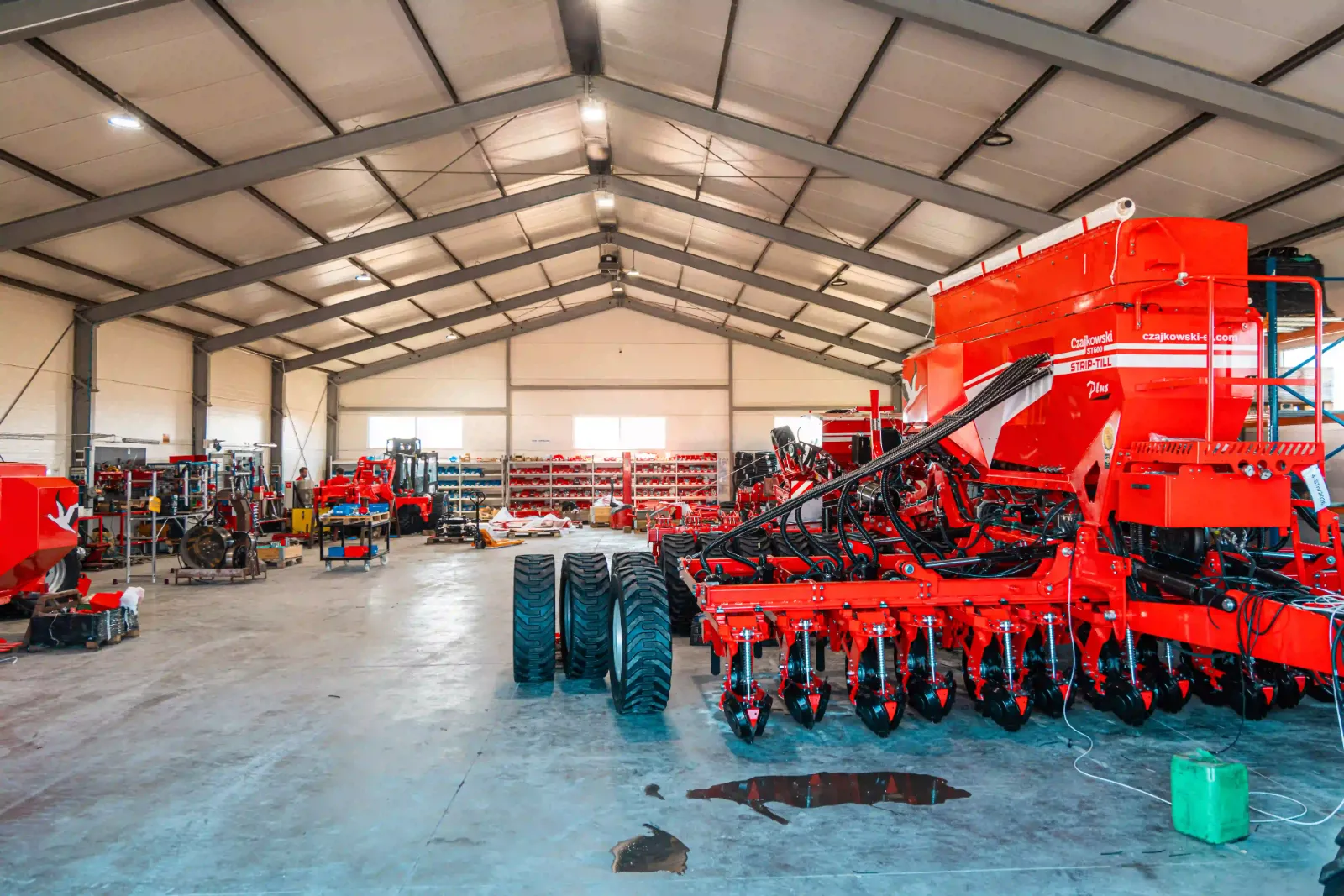
How to prepare farm machinery for winter? Maintenance and servicing
Preparing farm machinery for winter involves thorough cleaning, a technical inspection, lubrication and protecting components against corrosion and frost. Proper end-of-season maintenance helps reduce the risk of breakdowns, extend equipment life and avoid unplanned downtime during spring fieldwork. Working elements, hydraulic systems, batteries, tyres and liquid systems require particular attention. Find out how to protect farm machinery properly for winter.
How should farm machinery be maintained after the season?
Farm machinery maintenance should start with thoroughly removing mud, crop residues, fertilisers and other contaminants from the equipment. After washing and drying the machine, check the condition of working elements, bearings, drive belts, hydraulic hoses and paint coatings. Early detection of worn or damaged components makes it possible to schedule repairs before the next season begins. The scope of maintenance work should follow the manufacturer's instructions for the particular machine.
The main stages of preparing equipment for winter storage include:
- Washing and drying - removing soil, crop residues and fertilisers and thoroughly drying the machine's surfaces, taking care around electrical installations and seals.
- Technical inspection - checking bearings, belts, chains, bolted joints, hoses and working elements for wear and damage.
- Lubrication and corrosion protection - lubricating grease points, protecting exposed metal surfaces and safeguarding hydraulic cylinder rods according to the instructions.
- Checking fluids and fuel - checking service fluids and the fuel system and protecting systems at risk of freezing.
- Protecting the battery and electronics - charging the battery, checking electrical connections and protecting electronic equipment against moisture.
- Preparing tyres - checking pressure and tyre condition and limiting prolonged deformation during storage.
- Proper storage - placing the machine in a dry, ventilated location, preferably under cover.
How should farm machinery tyres be protected for winter?
Farm machinery tyres should be stored in a way that limits deformation, dampness and contact with chemicals. For machines remaining on their wheels, it is advisable to relieve as much load from the tyres as possible and, where specified by the manufacturer, increase pressure appropriately for storage. For example, Michelin indicates that pressure may be increased by 0.5 bar above the recommended operating pressure, while respecting the permissible limits for the tyre concerned. It is also worth moving the machine periodically to change where the tread contacts the ground. Always follow the tyre and machine manufacturers' guidelines, as storage requirements can differ between models.
Removed wheels with tyres can be stored vertically or horizontally, with suitable protection against deformation and pressure checks. Tyres removed from rims are best stored as recommended by their manufacturer, avoiding prolonged deformation and direct contact with damp ground. Both complete wheels and tyres alone should be kept away from sunlight, solvents and sources of high temperature.
How should the battery and electronics be cared for during winter storage?
Before winter, the farm machine's battery should be fully charged, its terminals cleaned and electrical connections checked. For extended storage, the manufacturer may recommend disconnecting or removing the battery. Conventional lead-acid batteries are best kept in a dry, cool place, protected against deep discharge, with regular voltage checks or a suitable maintenance charger. Do not leave a discharged battery in freezing conditions, as this increases the risk of damage. Terminals, controllers and other electronic components must be protected against moisture, and any removal must be carried out strictly according to the manufacturer's instructions.
How should an agricultural sprayer be prepared for winter?
Preparing a sprayer for winter requires thorough cleaning of the tank, hoses, filters, nozzles and other parts of the liquid system. For rinsing, use products specified in the sprayer's instructions and on the labels of previously used plant protection products. Remaining spray solution and rinsate must be managed in accordance with the applicable requirements and recommendations for the product concerned. After cleaning, remove water from the system and protect the pump, valves and hoses against freezing. Depending on the machine's design, this may involve using a suitable antifreeze, draining the system or removing selected components, if the manufacturer allows it.
Which products should be used to maintain farm machinery before winter?
Farm machinery maintenance uses technical greases, chain oils, corrosion inhibitors, cleaning agents and protective coatings intended for particular components. The choice of product should account for material type, mechanical load, operating temperature and contact with water. For example, the NLGI grade describes grease consistency but does not, by itself, determine suitability for a particular bearing or pin. The safest approach is to use products recommended by the machine manufacturer, because an unsuitable product can impair lubrication or damage seals.
The most commonly used maintenance products are:
- Bearing and pin greases - reduce friction and protect mating components against wear and corrosion.
- Chain oils and greases - protect chain drives against excessive friction and moisture.
- Corrosion inhibitors and protective waxes - create a protective layer on exposed metal surfaces.
- Machine cleaning agents - help remove operational dirt, deposits and fertiliser residues.
- Paints and protective coatings - restore damaged protection on metal surfaces.
How should a machine's fuel system be prepared for winter storage?
Preparing the fuel system for winter depends on the engine type, fuel used and planned storage duration. For machines with diesel engines, it is important to use diesel fuel suitable for winter conditions, while for petrol engines the manufacturer may recommend using a fuel stabiliser or emptying the tank. Some machines should be stored with a high fuel level, which reduces the amount of air in the tank and the risk of water vapour condensation. However, a full tank does not completely eliminate the moisture problem, so fuel storage should comply with the operating manual and the requirements of the particular fuel system.
How should farm machinery be stored in winter to avoid damage?
Farm machinery is best stored in a dry, covered and well-ventilated place that limits exposure to precipitation. Leaving equipment under tightly sealed, impermeable plastic sheeting for a long period can encourage moisture accumulation and corrosion. If equipment must remain outdoors, use suitable covers that allow moisture to escape and protect particularly vulnerable parts. Before storage, place the machine on stable ground, lower working elements to a safe position and relieve loads on components according to the manufacturer's instructions. Suitable indoor storage conditions reduce the risk of damage and make it easier to return equipment to operation before the season.
What are the consequences of neglecting farm machinery maintenance?
Neglecting farm machinery maintenance before winter increases the risk of corrosion, damage to hydraulic components, battery failure and premature component wear. Leaving water in liquid systems is particularly dangerous, as frost can cause hoses, valves or pump housings to crack. Neglected lubrication points and unprotected metal surfaces are also more vulnerable to moisture. Regular maintenance allows faults to be identified before the season begins, reducing the risk of costly repairs and downtime at the most important stages of fieldwork.
Where can farm machinery be professionally serviced?
Professional farm machinery servicing allows equipment condition to be checked, component wear to be identified and the machine to be prepared for the next season. For Czajkowski equipment, it is worth using the factory farm machinery service, which provides periodic inspections, warranty and post-warranty repairs, and technical support directly on the farm. The service covers machines from the Czajkowski range, including ST, STK, PS, PSP, VT and RC implements. Scheduling an inspection early makes it possible to identify necessary repairs and prepare equipment before intensive work begins.
Summary - how should farm machinery be cared for before winter?
Proper farm machinery maintenance before winter includes cleaning the equipment, technical checks, lubrication, corrosion protection and suitable preparation of fuel, hydraulic and electrical systems. Correct storage conditions and following the manufacturer's recommendations for particular components are also important. Work carried out after the season helps reduce the risk of faults and better prepares the farm for subsequent field operations. If you are planning an inspection or repair of a Czajkowski machine, contact the service department to agree on the scope and timing of the work.
FAQ - Frequently asked questions
What does farm machinery maintenance involve?
Farm machinery maintenance includes cleaning, lubrication, technical checks and protecting components against wear and corrosion. Before winter, the battery, fuel system and parts at risk of freezing also need attention.
Which grease is best for farm machinery?
The best grease for farm machinery is a product that meets the requirements of the manufacturer of the particular component. Selection should consider not only the NLGI grade, but also the thickener type, load, operating temperature and water resistance.
What is the best product for cleaning a sprayer before winter?
A sprayer is best cleaned with a product recommended by the equipment manufacturer and compatible with the labels of previously used plant protection products. Do not mix chemicals yourself or use sodium hypochlorite without explicit confirmation that it is permitted.
Does a tractor battery have to be removed for winter?
Not every battery needs to be removed for winter. The decision depends on the machine's design and the manufacturer's recommendations, but before extended storage it should be charged, protected against discharge and checked periodically.
How much does professional farm machinery maintenance cost?
The cost of farm machinery maintenance depends on the equipment model, the scope of the inspection, component condition and any repairs. An accurate quotation can be obtained by contacting the service department about the machine and specifying the work required.