
Soil liming in no-till systems - how to regulate pH correctly?
Soil liming in a no-till system primarily involves applying liming fertilisers to the surface without ploughing. The treatment helps regulate pH, improve nutrient availability and support soil biological activity. Unlike conventional tillage, however, lime is not evenly mixed through the soil profile, so its effect in deeper layers is limited. Find out how to plan liming correctly in Strip-Till.
What are the benefits of soil liming?
Soil liming helps reduce excessive soil acidity, decrease aluminium and manganese toxicity in acid soils and improve the uptake conditions for many nutrients. An appropriate pH favours phosphorus and molybdenum availability, as well as the activity of microorganisms responsible for decomposing organic matter. Regulating pH can also support the formation of a stable crumb structure, improving conditions for root development. However, excessive liming can reduce the availability of some micronutrients, so the rate must always be matched to the soil's needs.
What are the advantages of liming soil without ploughing?
Surface liming allows soil pH to be regulated without additional operations that intensively disturb its structure. In no-till systems, this preserves crop residue cover and limits mechanical disturbance of the soil profile. However, lime applied to the surface moves down into the soil very slowly, and the largest initial pH changes occur near the surface. The treatment's effectiveness therefore depends on regular pH monitoring and appropriate planning of subsequent applications.
How should soil pH be tested before liming in a no-till system?
Before liming, soil analysis should account for the soil's agronomic category, current pH and the nutrient requirements of the crops grown. In a no-till system, testing pH at different depths is particularly important, because the pH of the top layer can differ significantly from that of deeper soil. Consider taking separate samples from the 0-5 cm, 5-10 cm and 10-20 cm layers, using a consistent measurement method. This allows acidity in deeper layers to be detected when it would not be revealed by a single averaged sample.
Which products are best for liming soil in no-till farming?
The choice of liming fertiliser in a no-till system should primarily consider soil pH, agronomic category, magnesium content and the properties of the particular product. Carbonate fertilisers, including agricultural chalk, are often used on light and medium soils and act more gently than oxide forms. Where magnesium deficiency is also present, calcium-magnesium fertilisers can be considered, selected according to soil analysis results. Oxide lime can be used on heavier, strongly acidified sites, but its strong deacidifying effect requires particularly careful rate selection.
Does granular lime work well in no-till farming?
Granular lime can be a convenient option in a no-till system because it allows precise and even spreading with a suitable spreader. Moisture causes the granules to break down, releasing fine particles of liming fertiliser. Granulation alone does not mean that the fertiliser acts faster, as effectiveness also depends on chemical composition, fineness, reactivity and moisture conditions. Powdered lime can also be surface-applied where the product's properties and application conditions allow it.
How should lime be applied correctly in no-till farming?
Liming in a no-till system is usually carried out by spreading fertiliser evenly over the field surface without inverting the cultivated layer. Because lime acts mainly where it is applied, consider lower rates applied more frequently rather than a single large application. The rate and frequency should be based on current soil test results and fertilisation recommendations. If the cultivation system includes shallow soil mixing, this can help distribute lime more effectively in the surface layer, while remembering that it does not automatically resolve deeper acidity.
How is lime applied in Strip-Till?
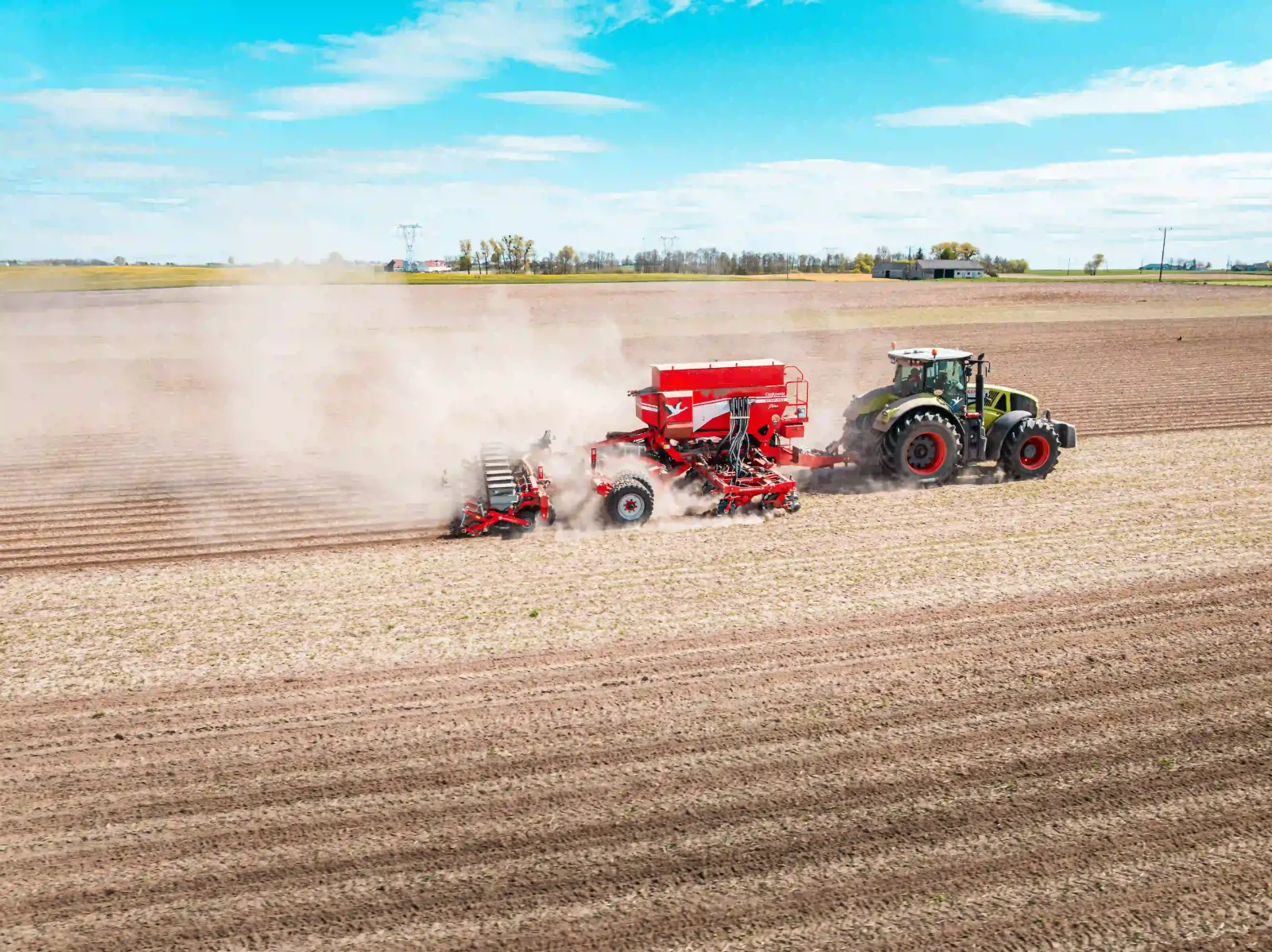
Strip-Till allows fertilisers to be placed locally into the loosened soil strip, concentrating their effect in a selected zone of root development. This approach may also be considered for local pH correction, provided the liming fertiliser used is suitable for delivery through the particular application system. Czajkowski ST and STK implements enable deep fertiliser placement during strip tillage, but the machine manufacturer must first confirm whether a particular liming fertiliser can be used. Localised placement does not replace liming the entire site if soil analysis also indicates acidity outside the cultivated strips.
Explore Czajkowski Strip-Till machines and check the available deep fertiliser placement solutions.
When is the best time to lime soil without ploughing?
The best time for soil liming is generally after harvest, in late summer and autumn. This allows the treatment to be planned well ahead of the next growing season and gives the fertiliser time to react gradually with the soil. Spring liming is also possible under certain conditions, particularly with suitable forms and lower fertiliser rates. However, do not apply lime to frozen or waterlogged soil, or under conditions that favour surface runoff, as this can reduce application effectiveness and increase the risk of fertiliser losses.
What interval should be left between liming and fertilisation?
Liming should not be carried out immediately before or after applying certain mineral fertilisers, particularly those containing ammonium nitrogen and selected phosphate fertilisers. An unsuitable combination of operations can cause nitrogen losses as ammonia or reduce phosphorus availability. For farmyard manure, slurry and liquid manure, an interval of at least 4-6 weeks from liming is generally recommended. For mineral fertilisers, timing should be adapted to their composition, lime type and manufacturers' recommendations rather than using one fixed interval for all products.
Summary - how can pH be regulated effectively in no-till farming?
Effective soil liming in a no-till system requires regular pH analysis, the right fertiliser selection and consideration of lime's limited movement down the profile. The priorities are avoiding excessive surface rates and monitoring pH in deeper layers too. In Strip-Till, localised pH correction in the cultivated strip may also be considered if the fertiliser application system allows it. Properly planned liming supports soil fertility while preserving the benefits of reducing intensive mechanical tillage.
FAQ - Frequently asked questions
Does lime need to be mixed into the soil after spreading?
No, in a no-till system lime can be applied to the surface without incorporation. However, remember that it acts mainly in the top layer, while pH correction at greater depth takes place much more slowly.
Which lime is best for no-till farming?
Carbonate lime is often used in no-till farming, including in granular form. However, the right choice depends on soil type, current pH, magnesium content and the fertiliser's reactivity.
How often should soil be limed without ploughing?
In a no-till system, it is worth applying lime at lower rates, with frequency determined by soil testing. There is no single mandatory schedule, as the rate of reacidification depends on the site and the fertilisation system used.
Does surface liming raise pH in deeper soil layers?
Yes, but changes in pH in deeper layers generally occur slowly. In no-till systems, pH should therefore be monitored at different depths, without assuming that a single surface application will remove acidity throughout the profile.
Can lime be applied at depth in Strip-Till?
Yes, localised placement of a suitable liming fertiliser into the cultivated strip is possible with equipment adapted for this purpose. Before application, check the product's compatibility with the application system and select the rate based on soil analysis results.