
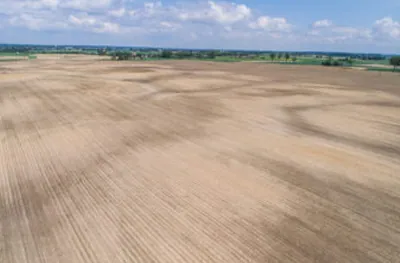
More practice, less statistics
Practice over theory
The best test of any technology is a real field, not just a table of results. That is why we rely on trials conducted under the conditions of an ordinary farm.
In such trials varieties and technologies are tested side by side, on the same soil and in the same weather, which gives a reliable picture of the differences.
A practical approach lets the farmer see the effects of strip-till with their own eyes before deciding to change technology.
Comparison under identical conditions
The key to a credible comparison is running the variants on neighbouring fields with the same characteristics.
This way, differences in yield and plant condition result from the technology, not from random factors.
This approach builds trust in the results and makes decision-making easier.
Observing the plants during the season
Practice also means daily observation of the crop stand: the pace of emergence, root condition and response to drought.
Plants in strip-till often withstand periods of water shortage better thanks to a deeper root system.
Such observations are invaluable and complement the hard numerical data.
Conclusions from the field
Field trials confirm that strip-till combines savings with good yields under the real conditions of a farm.
Farmers value above all the smaller number of passes and better soil water management.
These are arguments that speak more strongly than any statistic.
What the farmer gains
Fewer passes mean savings in fuel, time and machine wear every season.
A better soil structure translates into more stable yields under variable weather conditions.
The sum of these benefits is a better economic result for the farm.
How to start
It is worth starting by setting aside a demonstration field and comparing it with your current technology.
Agronomic advice helps to select the machine settings and fertilisation programme for specific conditions.
Gradual implementation reduces risk and builds the team's experience.
FAQ – Frequently asked questions
Why are field trials more important than statistics alone?
Because they show how the technology works under the real, variable conditions of a specific farm, not just under idealised laboratory conditions.
What is the best way to test strip-till on your own farm?
By setting aside a demonstration field and comparing it with your current technology, with the support of agronomic advice.