
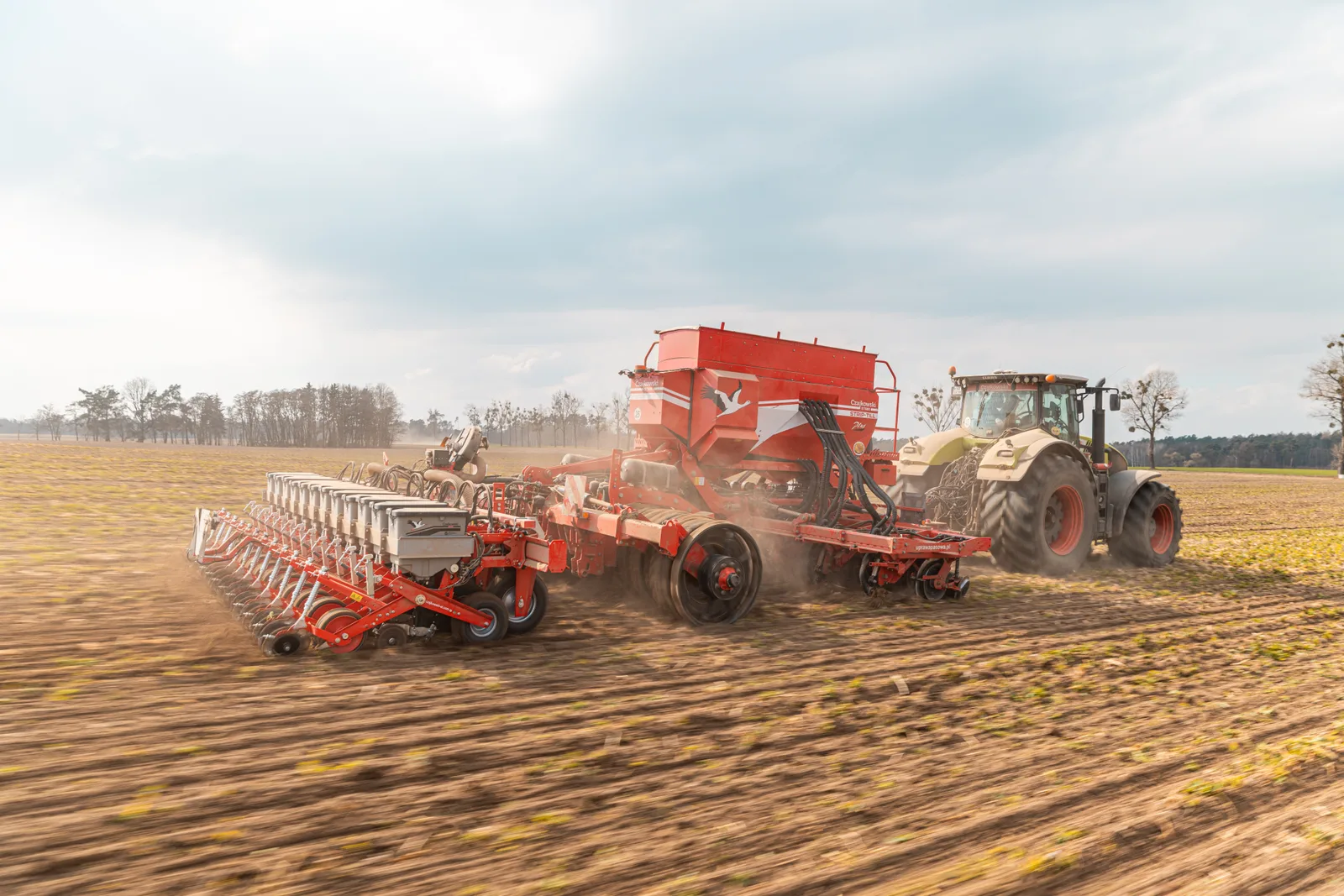
Used strip-till cultivator - what to check before buying?
Buying a used strip-till cultivator can significantly reduce the cost of adopting strip-till technology, but requires a thorough inspection of the frame, shanks, working parts and hydraulic system. Properly checked equipment must provide deep soil loosening and reliable operation during the busiest part of the season. Drawing on our experience of operating machinery across 1,100 hectares of our own fields, we understand the loads placed on second-hand cultivators, including the Czajkowski ST and STK models. In this article, we discuss the key pre-purchase checks to help you choose dependable equipment for years to come.
What should you check when buying a used strip-till cultivator?
When buying a used strip-till cultivator assess the condition of the main frame, welded joints and working parts, as well as the leak-tightness of the hydraulic system first. Non-inversion tillage machines work at depths of up to 35 cm, creating enormous loads when they encounter obstacles hidden in the soil. A detailed inspection of second-hand components prevents costly downtime in the field and allows you to estimate potential servicing costs accurately.
It is worth dividing the pre-purchase inspection into 4 areas:
- Main frame and welded joints: assess the structure for microcracks and twisting of the longitudinal frame members.
- Shanks and working parts: check wear on the points, side wings and residue-clearing discs.
- Hydraulic system and protection devices: check hoses, cylinders and pressure valves for leaks.
- Fertiliser hopper and metering units: check for corrosion, leaks and proper rotor operation.
Frame and shank condition - how can you spot cracks and deformation?
Cracks and frame deformation are easiest to spot by inspecting the welds around the shank mountings and checking the symmetry of the entire structure with a tape measure. A machine working on stony fields with a high-powered tractor is constantly subjected to stress.
Bent shanks cause uneven working resistance, make the machine pull to one side and disrupt row alignment. Before completing the purchase, thoroughly clean dirt from the key weld joints and check for amateur welding repairs.
Hydraulic system - what indicates wear in the protection devices?
Wear in the hydraulic protection devices is indicated by oil leaks from the cylinders, falling pressure on the gauges and a shank failing to return to its set working position after passing an obstacle. Hydraulic non-stop protection systems require constant pressure to maintain an even loosening depth in the soil strips.
Leaks in the system or worn valves cause working units to lift uncontrollably during operation, damaging the structure of the prepared row. Before buying, hitch the cultivator to a tractor and test the system under full load.
Working parts and hopper - how should you assess the points and metering units?
Assess the condition of the points and fertiliser metering units by measuring the steel thickness at the leading edges and checking inside the hopper for cleanliness and corrosion. Worn loosening points and cutting wings increase the machine's draft power requirement.
Fertiliser residues left in the hopper absorb moisture, causing material to cake and damaging the electrically operated metering units made from acid-resistant steel. When choosing a used cultivator, estimate the cost of replacing wear parts and take it into account when negotiating the price.
Does a used strip-till cultivator always need servicing?
A used strip-till cultivator almost always needs an initial service including seal replacement, lubrication of pivot points and calibration of the metering units before heading into the field. A second-hand machine has already worked hundreds of hectares, resulting in natural wear on its working parts.
Servicing protects the farm against unexpected breakdowns. Key tasks include checking that the point mounting bolts are tight, inspecting bearings on the press rollers and checking that fertiliser delivery hoses are clear.
Second-hand Czajkowski ST and STK strip-till cultivators
Used Czajkowski cultivators retain a high market value over time thanks to their robust frame construction and the ready availability of factory spare parts. The machines were designed for demanding soil conditions, ensuring they remain in good working order for many seasons.
The main features of each series:
- Czajkowski ST series: machines designed for large-scale farms and agricultural contractors. They provide deep soil loosening down to 35 cm combined with subsurface fertiliser application from hoppers holding up to 4,900 litres. The reinforced frame supports working widths of 3 to 6 metres, while hydraulic protection safeguards the working units on stony fields.
- Czajkowski STK series: a series suited to tractors rated at 160 to 250 hp, combining lower weight with full strip-till functionality. Its off-set system effectively prevents crop residues from blocking the machine. The working depth of 20-35 cm can be adjusted without tools, and the acid-resistant steel hopper allows fertiliser to be metered at two depths.
Choose a sound strip-till cultivator and avoid breakdowns
Investing in a used strip-till cultivator significantly lowers the financial barrier to adopting non-inversion tillage without compromising soil cultivation quality. A meticulous assessment of the frame, shanks, loosening units and hydraulic system ensures you choose equipment that will remain fully operational for seasons to come.
Are you planning to adopt strip-till technology and need a professional equipment assessment? Visit https://uprawapasowa.pl/ and consult our experts, who will help you select the best machine for your needs.
FAQ - Frequently asked questions
What should you look for when buying a used strip-till cultivator?
When buying a used strip-till cultivator, assess the condition of the main frame welds, wear on the loosening points and leak-tightness of the hydraulic protection system. Rule out bent shanks that could cause uneven working depth and make the machine pull to one side. Also check the fertiliser hopper for damage to its metering units. A thorough inspection helps avoid unexpected servicing expenses immediately after purchase.
Why choose a used Czajkowski ST or STK cultivator?
A used Czajkowski strip-till cultivator is worth choosing for its reinforced structural-steel frame and straightforward access to original spare parts and factory servicing. The equipment was designed using practical experience in demanding Polish soil conditions, resulting in high mechanical durability and a slow decline in value on the second-hand market.
How much does a used Czajkowski strip-till cultivator cost?
The final price depends on the working width, whether a seeding attachment is fitted and the condition of the wear parts. Exhibition or demonstration machines that have worked a few hundred hectares cost less than factory-new models while retaining a full guarantee of proper working condition. The exact price of each individual machine is determined separately.
What tractor is needed for a strip-till cultivator?
The power requirement for strip-till cultivators ranges from 160 hp for smaller compact models to more than 350 hp for machines with a working width of 6 metres. It depends mainly on the intended loosening depth, terrain and soil firmness. Heavier cultivator series also require sufficient hydraulic pump capacity and rear three-point linkage lifting capacity. Correctly matching the tractor's power prevents engine overload and helps maintain the optimum working speed in the field.