
What is strip cultivation? Everything you need to know
Strip cultivation (strip-till) is an innovative agrotechnical technology based on loosening only narrow strips of soil while simultaneously point-seeding and precisely applying fertiliser. In this article you will learn how this method reduces the number of tractor passes, guaranteeing you immediate financial and time savings. We know perfectly well that, as an agri-investor, you deal every day with rising production costs, water deficits and relentlessly shrinking sowing windows. Based on years of rigorous testing carried out on our own 750-hectare farm, we deliver you only field-proven solutions. See how Czajkowski units will help you abandon conventional ploughing, protect the soil structure against drought and maximise the profitability of your crops.
What is strip cultivation and how does it work in practice?
Strip cultivation is based on the no-till loosening of soil exclusively in the root growth zone, leaving the inter-rows intact under the cover of crop residues. This method combines three operations in a single pass: deep soil loosening, deep application of mineral fertilisers and precise seeding. By limiting the disturbance of soil structure to about 33% of the field surface, this technology effectively protects soil moisture against evaporation. This system minimises the tractor power required per hectare and reduces field compaction by heavy equipment.
The strip-till mechanism – combining loosening and seeding
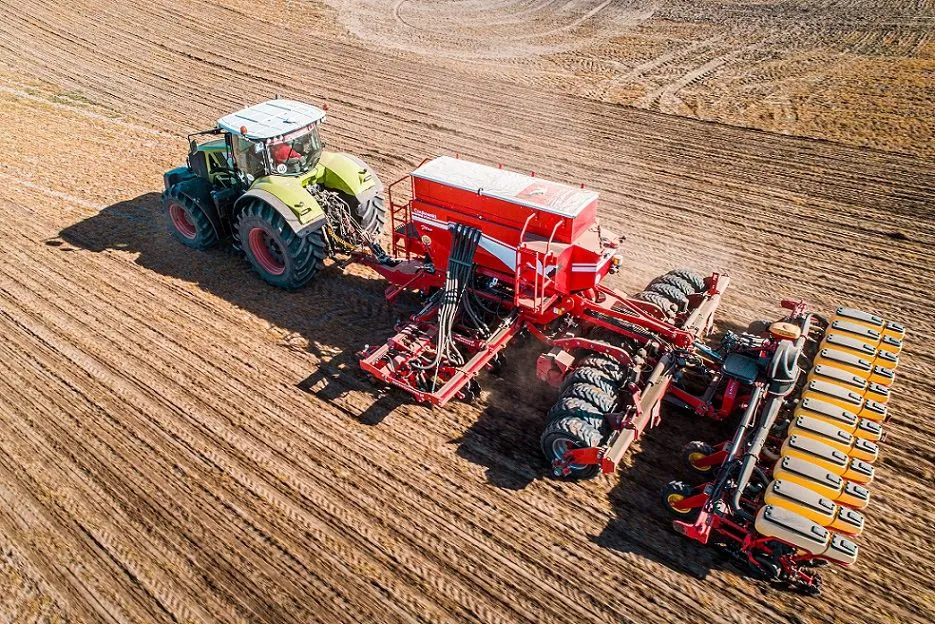
The strip-till mechanism relies on a working section that loosens a strip of soil to a depth of up to 30 cm, deposits fertiliser at two levels and, directly behind it, places the seeds in the loosened soil. Disc coulters cut through plant residues, preventing them from being pressed into the seed furrow, after which the loosening tines break up the arable layer. Cleaning stars and press wheels form the soil strip, creating optimal conditions for drawing up groundwater. At the same time, the applied fertiliser dose goes directly into the root-system development zone, which accelerates the early growth of plants.
No-till farming vs strip-till – how do they differ?
No-till farming is based on the surface mixing of soil across the entire working width, whereas strip-till loosens the soil only in the narrow strips intended for seeding. In classic no-till the entire field surface is mixed with crop residues, which increases water evaporation from the top layer of soil. Strip-till technology leaves the inter-rows intact and covered with mulch, which reduces wind and water erosion. Moreover, strip cultivation enables deep loosening of the root zone without the need to spend large amounts of fuel over the machine's entire working width.
Why implement strip-till? 5 key benefits
Implementing strip-till technology brings the farm savings of up to 50% on fuel, a reduction in working time per hectare and increased water retention in the soil. Switching to this system allows you to reduce the machinery fleet and cut the number of passes from 4-5 conventional operations to a single compressed pass. This translates directly into lower equipment depreciation costs and a drop in spending on service and consumable parts. In the long term, cost-effective strip cultivation additionally supports the rebuilding of biological life in the soil and improves its crumb structure.
How to reduce fuel consumption and working time in the field?
A 40-50% reduction in fuel consumption results from replacing several separate working passes with a single integrated pass of the strip unit. Instead of performing ploughing, cultivation, fertilisation and seeding as separate operations, the strip-till unit carries out all these tasks simultaneously. Average diesel consumption falls from 35-45 litres per hectare in the ploughing system to about 15-22 litres in the strip system. Time savings reach as much as 60%, which allows large areas to be sown on time within tight agrotechnical windows.
Water retention and protecting soil structure against drought
Water retention in strip technology increases thanks to leaving intact mulch in the inter-rows, which limits evaporation and increases rainfall infiltration. The crop residues located between the cultivated strips form a natural thermal barrier, lowering the soil temperature on hot days by several degrees Celsius. Earthworm channels and former roots in the uncultivated strips remain intact, easing the infiltration of rainwater deep into the soil profile. As a result, plants maintain turgor for much longer during prolonged rainless periods, showing greater resistance to drought.
Improving soil biochemistry and yield stability
The improvement in the soil's biological properties results from not disturbing the life of microorganisms and earthworms in the uncultivated inter-row zones. Limiting the oxygen supply to deeper layers, characteristic of the absence of ploughing, prevents the rapid burning of soil humus. Increased biological activity accelerates the availability of nutrients such as phosphorus and potassium, applied precisely in the root zone. This translates into even emergence and a stable yield even in years with unfavourable weather.
What machines are essential for strip cultivation?
Proper implementation of strip cultivation technology requires a dedicated strip-till unit with an integrated loosening section, a fertiliser applicator and a precision seed drill. The choice of the appropriate equipment configuration depends on the crop structure, the power of the tractors owned and the size of the farm. Dedicated machines for strip cultivation make it possible to eliminate the need for ploughs, conventional tillage-seeding units and fertiliser spreaders. Properly selected equipment ensures a stable working depth and precise metering of fertiliser doses in the arable layer.
Innovative ST-series units for large areas
ST-series units are large-area machines designed to work in difficult soil conditions on medium and large acreages. The construction, based on a solid frame, enables simultaneous soil loosening, sowing of mineral fertilisers and precise seeding in a single pass. Large-capacity tanks reduce downtime for loading, which raises daily output reaching several dozen hectares. These machines maintain a stable working depth thanks to advanced depth-copying systems of the working sections.
STK-series units created for smaller farms
STK-series units are manoeuvrable and lighter machines dedicated to farms with smaller acreages and lower power of the cooperating tractors. They allow the full benefits of strip-till technology to be exploited without the need to invest in tractors of more than 200 HP. The compact design makes it easier to manoeuvre on narrow and irregular fields. This construction guarantees an optimal crumb structure in the seed strip while maintaining low fuel requirements per hectare.
Patented seeding systems for maximum precision
The patented seeding systems integrated with the strip units ensure an identical seed placement depth and optimal contact of the grain with the soil. Precise seed metering combined with the appropriate pressure of the press wheels eliminates the formation of air pockets around the grain. The ability to apply starter fertiliser directly beneath the seed at the same time stimulates rapid early development of the root system. As a result, emergence is even and fast across the entire field surface.
How does strip cultivation perform in wheat and maize?
Strip cultivation performs well in growing maize and wheat, ensuring deep rooting and optimal access to fertiliser in the root zone. In the case of maize, strip-till makes it possible to place phosphorus and nitrogen fertiliser exactly beneath the row axis, which accelerates the plants' start in spring and increases resistance to drought. When sowing wheat, this technology guarantees appropriate soil density beneath the grain and correct moisture wicking. In both cases the plants show higher vigour and higher efficiency in the use of nutrients compared with conventional cultivation. If you have questions about matching the technology to a specific crop rotation, it is worth consulting through our contact form.
Summary
Strip cultivation is an agrotechnically tested answer to the challenges of drought, rising fuel prices and shrinking sowing windows. Switching to strip-till technology makes it possible to combine soil protection with higher profitability of agricultural production. Join the ranks of conscious farmers and invest in a technology tested under real conditions on a 750-hectare farm. Go to the home page and choose a strip unit matched to your farm's requirements today!
FAQ – Frequently asked questions
How does strip cultivation (strip-till) differ from conventional ploughing?
Strip cultivation differs from conventional ploughing in that it loosens the soil only in narrow seed strips, leaving the inter-rows intact and covered with crop residues. Conventional ploughing turns over the entire soil to a depth of 25-30 cm, which increases water evaporation and accelerates humus degradation. Strip-till combines deep strip loosening, fertiliser application and seeding in a single pass. As a result, it saves fuel, protects soil structure and improves moisture retention.
What machines are essential to implement strip-till technology?
Implementing strip-till technology requires a strip unit with an integrated fertiliser applicator and seeding section or a set consisting of a strip subsoiler and a precision seed drill. The unit must have disc coulters that cut through crop residues, loosening tines and rollers that firm the seed strip. The whole works with an agricultural tractor whose power is matched to the working width and number of sections, amounting to 30 to 50 HP per section. It is worth choosing machines equipped with precise systems for metering mineral fertilisers at two depths.
For which crops does strip sowing work best?
Strip sowing works best in growing maize, oilseed rape, sunflower, sugar beet and cereals such as wheat. Plants with a taproot system and those with a high demand for deep soil loosening respond with the greatest yield increase. The precise application of fertiliser beneath the seed row stimulates vertical root growth and increases nutrient uptake. This technology proves itself in both spring and winter crops.
Does strip cultivation reduce the costs of running a farm?
Yes, strip cultivation lowers the costs of running a farm by reducing diesel consumption by 40-50% and lowering spending on labour hours and mineral fertilisers. Reducing the number of passes to a single operation lowers machine wear and reduces the need for a tractor fleet. Deep application of fertiliser directly into the root zone raises fertilisation efficiency, which makes it possible to reduce total doses by 15-20%. The time savings enable more efficient management of larger acreages with a constant workforce.
What are the biggest drawbacks and challenges of strip cultivation?
The biggest challenges in strip cultivation are the need to bear the initial outlay to purchase a specialised unit and the required high precision of tractor guidance using GPS navigation. This technology requires careful management of crop residues after harvesting the preceding crop in order to avoid clogging of the working sections. In spring, the soil in the uncultivated strips may warm up somewhat more slowly than in a ploughed field, which requires adjusting the sowing date. With the right choice of unit and agrotechnical discipline, these challenges are fully offset by the increase in profitability.