
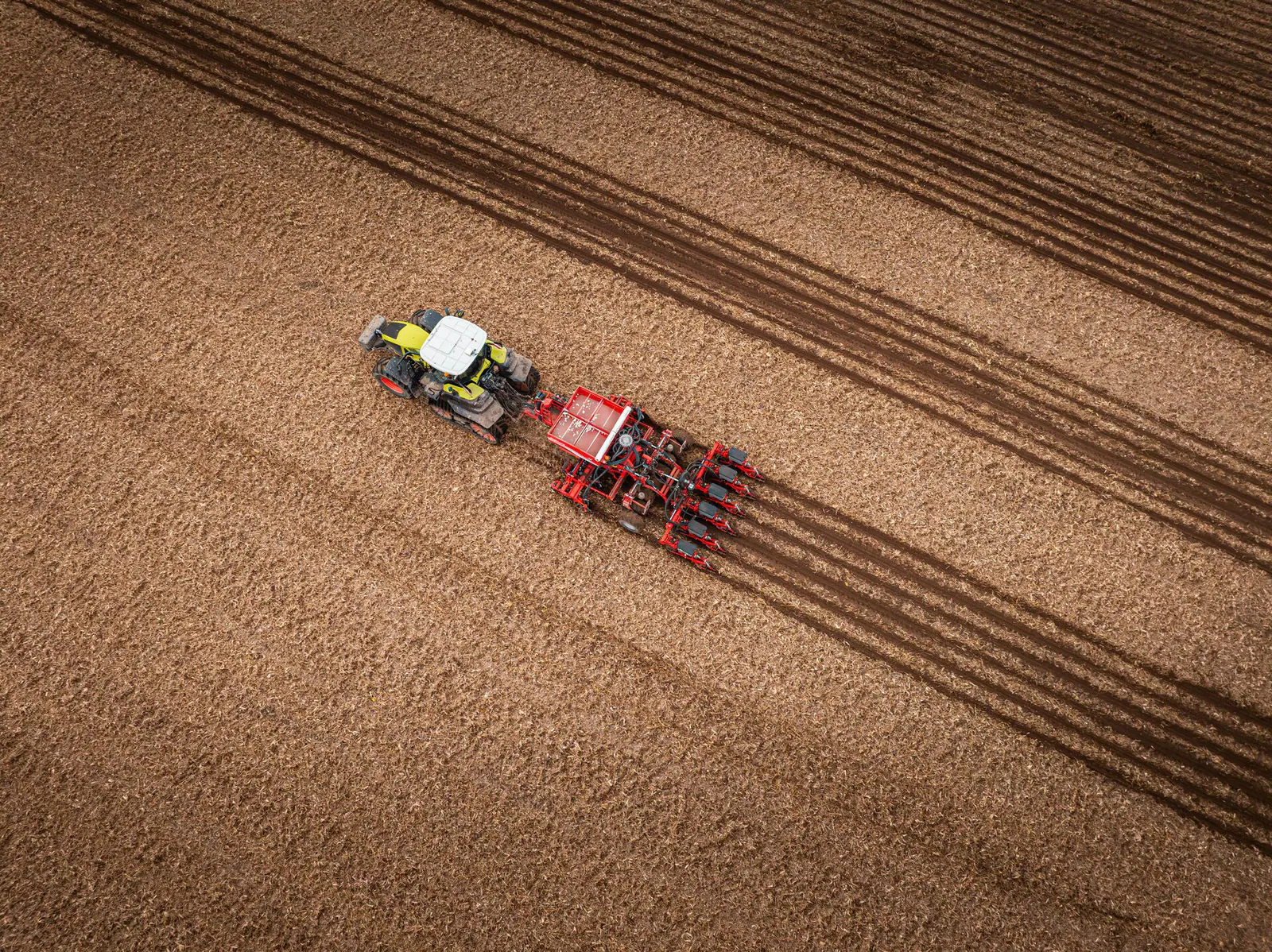
Which strip-till cultivator to choose? Key criteria for a successful purchase
Choosing the optimal strip-till cultivator depends primarily on the power of your tractor and the type of soil. Our experience shows that a reliable machine should deep-loosen the soil, apply fertilizer, and sow seeds in a single pass. Such a system guarantees significant fuel savings and eliminates the problem of working components clogging with crop residues. Read the article below and learn how to choose equipment that will permanently improve work on your farm and ensure a quick return on investment.
Key criteria for choosing a strip-till cultivator
Choosing a strip-till cultivator is based on matching the machine's parameters to the tractor's pulling capacity, field structure, and the target seeding technology. This decision affects operating costs and yields, so it is necessary to analyze the most important technical parameters before purchasing.
These include:
- Power requirement and machine working width
- Ability of the shanks to work in difficult soil profiles
- Possibility of combining loosening and sowing in a single pass
Tractor power - the basis for selecting the machine
Tractor power determines the working width and the model of the strip-till cultivator. The design requires adhering to the rule of a maximum of 100 hp per one meter of the cultivator's working width. Exceeding this limit results in the loss of the factory warranty and carries the risk of mechanical damage to components.
When considering what tractor power is appropriate for a strip-till cultivator, you must take into account the specific terrain and soil type on your farm. Correct configuration guarantees the maintenance of a smooth operating speed, which determines the precise operation of seeding units in strip-till technology.
Soil type - eliminating the plough pan and residues
A strip-till cultivator working on clay soils must have vertical shanks operating at a depth of up to 35 cm and an asymmetrical arrangement of working sections. This design solution, based on an off-set system, effectively prevents the phenomenon of straw pushing and the machine getting blocked by crop residues.
The tool interacts only with a narrow seed strip, which leads to breaking the impermeable plough pan without inverting the soil profile. Leaving mulch in uncultivated inter-rows protects the field against wind erosion and reduces water evaporation during summer months.
Single-pass operation - loosening and sowing in one
Single-pass operation in strip-tillage consists of performing deep loosening, soil fertilization, and seed sowing during one pass of the machine. Reducing the number of passes translates into less field compaction and lower diesel consumption.
When analyzing the market and available strip-till cultivators, look for devices with high-capacity twin-chamber tanks that dose granules precisely. Such a system generates a measurable increase in yield while maintaining the desired soil structure.
Czajkowski strip-till cultivators
Strip-till technology in Czajkowski machines carries out loosening, fertilization, and sowing in a single pass, leaving the inter-rows undisturbed. This approach effectively limits evaporation and reduces surface water runoff by up to 92%. Choosing the optimal cultivator depends primarily on the planned acreage and the maximum pulling power of your tractor.
Compact STK series for 160-250 hp tractors
Compact STK cultivators are designed to work with tractors from 160 hp to 250 hp. The design of these machines has been optimized for medium-sized farms, and their most important operating features are:
- Off-set system: an asymmetrical arrangement of working sections and a tire packer with a diameter of 89 cm minimize soil pressure and prevent the machine from blocking with crop residues.
- Hydraulic non-stop protection: protects every working component and allows for stepless adjustment of working depth from 20 to 35 cm without the use of tools.
- Twin-chamber tanks: a system with a capacity of 2 × 1400 l or 2 × 1200 l ensures precise distribution of granules directly to the root zone.
ST series cultivators dedicated to the largest acreages
ST cultivators are created with large farms and professional service companies working on extremely demanding soils in mind. The most important technical parameters of this powerful series include:
- Working width up to 6 meters: the largest units, such as the ST 600, use up to 16 loosening sections for efficient work.
- Fertilizer tanks with a capacity of 4900 l: designed in a 40/60 or 60/40 partition layout, they allow for minimizing downtime on multi-hectare plots.
- Integration with precision farming: agrotechnical process control is supported by advanced navigation systems that work directly with Trimble GFX-1060 terminals.
Choose a Czajkowski strip-till cultivator and increase profitability
Choosing a strip-till cultivator requires matching it to the tractor's pulling capacity and hydraulic protections preventing clogging. Strip-till technology reduces passes, protects the soil, and noticeably lowers cultivation costs on every hectare. Optimize costs on your farm. Check our full offer on our website and choose equipment tailored to your needs: https://uprawapasowa.pl/.
FAQ - Frequently asked questions
What should you pay attention to when choosing your first strip-till cultivator?
When choosing your first strip-till machine, you must match its width to the tractor's power, without exceeding a load of 100 hp per one meter of working width. Another important criterion is the presence of hydraulic protections on the shanks and the design of the roller. These technologies will protect a beginner user from costly breaking of working elements in a collision with underground stones.
What tractor power is required for efficient work with a strip-till cultivator?
For efficient work with the smallest compact cultivators, a tractor with power starting from 160 hp to 250 hp is needed. As the number of sections increases and heavier frames are used, the demand for power grows proportionally. You should always provide the machine with a reserve of pulling power to maintain a proper, constant travel speed that guarantees uniform seed delivery.
Which strip-till cultivator will work best on heavy and stony soils?
For heavy and stony soils, it is best to choose cultivators that have double-acting hydraulic non-stop protections. This system actively absorbs the impact of the chisels on obstacles and allows them to return to the set depth without stopping the tractor. This makes it possible to eliminate the plough pan even in the most difficult, clayey profile.
Is it worth buying a used strip-till cultivator for a small farm?
Purchasing a used strip-till cultivator is a profitable investment for smaller farms, lowering the threshold for entry into the technology while maintaining full technical support. Machines from the secondary market and demonstration models are available in a much more affordable budget than brand-new sets. Authorized units undergo a full factory audit and retain a 12-month manufacturer's warranty, which ensures fully safe operation in the field.
How do cultivators with a shank seeder differ from those with a disc seeder in strip-till technology?
Cultivators with a shank section create a seed furrow by physically pushing the soil aside, while disc systems cut through the top layer, which further limits its structure. The choice of a specific implement should be dictated by the target type of crops planted and the target amount of mulch left behind. The use of advanced seeding sections equipped with digital ISOBUS systems also allows for maintaining perfect seed separation regardless of soil specificities.